Our Philosophy
Big Country Genetics has a simple and direct mission: to produce sensible cattle that generate profits for the operation, its customers and the greater beef industry. Although the mission is short and to the point, achieving the goal is far from simple. Almost every seedstock provider will tell you that they are doing exactly this; however, it takes a deep discerning look to truly predict profitability through genetics!
As cattlemen and women, we are always making predictions on when to market our calves, assessing which supplements to feed and determining what genetic line will increase ranch profitability the most. We try our best, but sometimes we simply make the wrong decision and fall short. These failures are alright so long and we learn from them; and, make measured corrections. Our belief is that there is no perfect cow, but there are profitable cattle and unprofitable cattle. With that being said, we aren’t interested in the notion of falling in love with certain cattle. Instead, we like to set bench marks and the cattle that meet these marks get to remain within the operation, and cattle that don’t simply fall out.
“To develop truly exceptional cattle, you have to put some pressure on them.”
Our Philosophy, Continued…
01
Forage developed
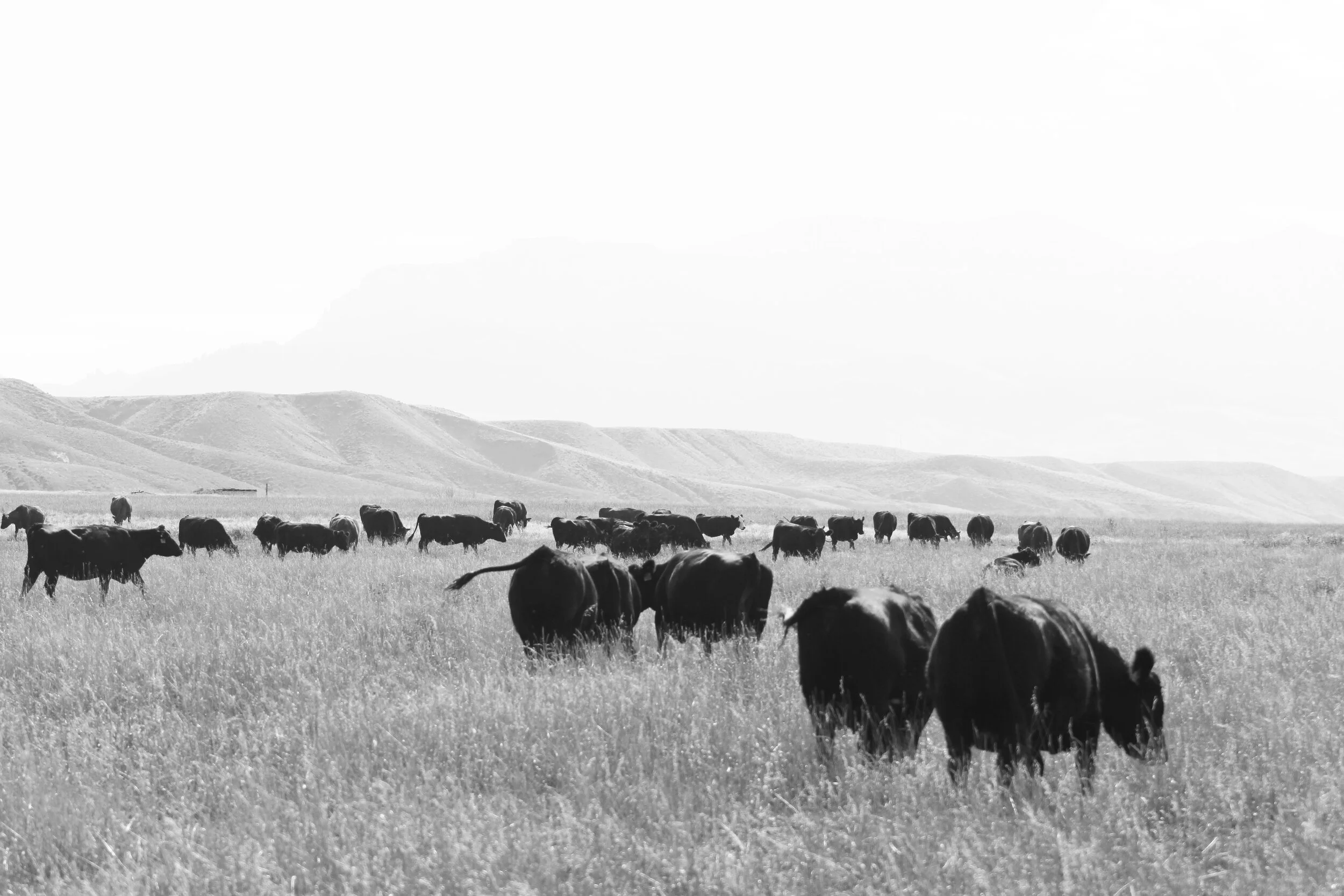
Our cattle are expected to calve in a 45 day widow and graze year around in northwestern Wyoming. Utilizing high desert native forages through the majority of the year, they winter on crop stubble and stockpiled irrigated fields and only receive long stem hay when grass is unavailable. The cows and first calf heifers are expected to calve outside and unassisted - a female that cannot give birth to a healthy calf on her own simply does not have a place here. The heifer calves are weaned on long stem hay for 40-50 days before returning to the cow herd to graze through the winter. While the bull calves are bale grazed through their first winter and expected to develop on grass alone.
02
The Red solo cup method
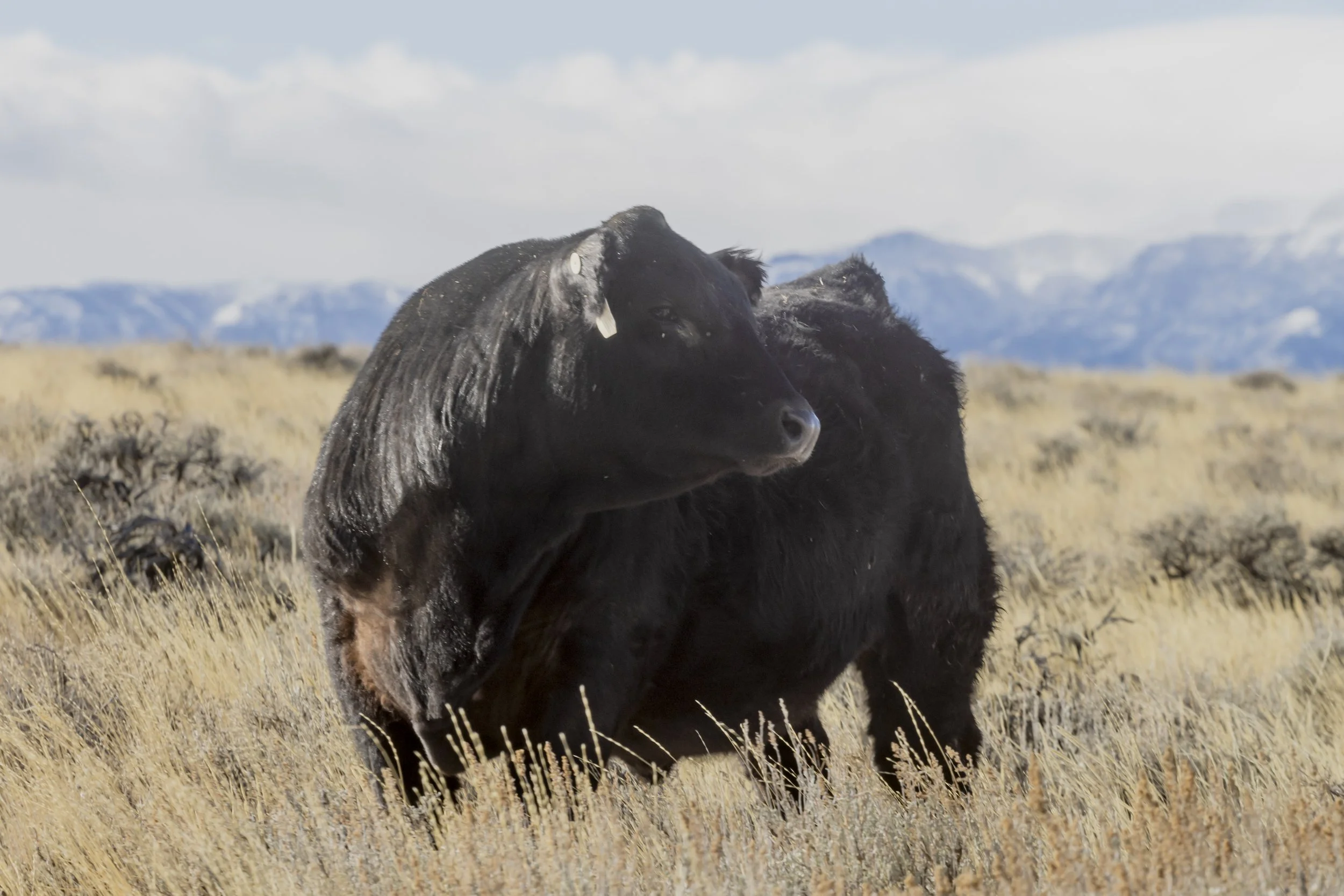
We believe that Mother Nature has a “Type & Kind” of cow that works best within her perimeters. We subscribe to the red solo cup method of viewing cattle. When viewed from the profile a cow should be feminine about her head and neck with a neat chest floor and rearward sweeping rib shape with a large amount of body volume. Due to the fact that estrogen production shuts off long bone growth in the front end of the animal first, a female should seem as though she is running slightly down hill, this gives her the shape of a red solo cup with her head and neck being on the small end of the cup. A bull is the opposite, much like two masculine men standing side by side their shoulders will touch. A bull is much the same, testosterone causes an animal to put meat and muscle on up front giving them the appearance of a red solo cup with the bulls head being on the big end of the cup. Another point of emphasis we have when sorting cattle is their ability to shed early in the year. We have found that the females that shed the earliest are the cattle that tend to breed early in the season every year.
03
Fertility as a heritable trait
Many people in today’s cattle industry will try to tell you that fertility is a lowly heritable trait, however, hair coat and fleshing ability are very heritable and have a strong correlation to fertility. Fertility is only lowly heritable in environments that are artificial and we as humans are there ensuring every cow gets exactly what she needs to succeed. In a real world environment a good cowman can see a pattern to the cattle that are consistently working. A herd of bison, elk or any other form of wildlife is extremely consistent, to the point in which the best cattlemen in the world would have trouble differentiating one cow from another. Yet, due to personal biases and breeding extremes together in search of the outliers, today’s beef herd is so inconsistent that one can step into almost any herd and see cows of every shape and size.
04
The moderate size cow
This brings me to my next point. In a situation in which resources are limited, Mother Nature favors the small cow. The issue of cow size is amplified on years like this. We are currently in extreme drought and hay is not only extremely expensive but it’s also hard to come by! I’d venture to say the average seed stock cow is weighing 1,500-1,600 pounds requiring roughly 32 pounds of dry matter daily and more when she’s lactating. Whereas our 1,100-1,200 pound cows consume closer to 24 pounds of dry matter daily. Not to mention it is proven that a smaller cow will wean a much higher percentage of her body weight than a big cow when the cattle are required to utilize forage to raise their calves.
-
Yes! If you’ve ever bought a brand-new pickup, or any new vehicle for that matter, you probably received something like a “three year/36,000-mile warranty.” Automobiles have become so expensive that a warranty and insurance are a necessity when it comes to owning vehicles in today’s world. In the same way that the importance and cost of a new vehicle has risen dramatically in the last 50 years, so has the importance and cost of quality bulls.
Unfortunately, the longevity of today's beef genetics seems to have gone the wrong direction. I have heard this complaint time and time again as bulls are seeming to fall out of programs faster than ever before. We are combating this issue by selling every Big Country Genetics bull with a 3-Year Breeding Guarantee! This is similar to a dealership selling a vehicle with a warranty, but it also allows the commercial cowman to insure himself against potential losses without having to pay extra for that peace of mind. Our three-year breeding guarantee covers foot and soundness issues as well as semen quality, and truthfully it helps us just as much as it does you!
The way we develop and feed the bulls protects both ourselves and our customers from feet and structure issues and increases the longevity of our bulls. Therefore, when problems with feet do arise, we can often link the issue to a certain dam or sire, which allows us to make the necessary cuts to ensure the issues do not reappear.
All bulls that fail to pass a breeding soundness exam due to infertility, feet or leg structure will be guaranteed for three years from the time of sale. The guarantee will be satisfied as a credit toward our next bull sale and not redeemable in cash. All bulls are sold as satisfactory breeders by our DVM. This guarantee does not cover any negligence, mismanagement, disease or act of God.
Example: First year 100% less salvage value, second year 67% less salvage value, and third year 33% less salvage value.
All claims against the guarantee must be examined by a Veterinarian and a detailed Vet certification must be provided by the purchaser to the seller at the time of the prognosis. We here at Big Country Genetics reserve the right to have a bull’s semen/fertility rechecked by one of our approved Veterinarians.
-
Yes! When ten bulls are purchased, a 10% discount will be applied. When 20 bulls are purchased, a 15% discount will be applied.
-
All the bulls were PAP tested at 5,700 feet of elevation by Dr. Alan Gotfredson with Flying A Animal Health out of Ten Sleep, Wyoming. The bulls averaged a PAP Score of 37.
-
Yes! Free delivery is offered for the purchase of 5 or more bulls anywhere in the US, and free delivery is also offered to any bulls sold into Montana or Wyoming. A detailed map of the state-by-state cost breakdown for delivery is offered in the back of the catalog on the Sale Details page.
-
We believe that seed stock cattle should be expected to work within their environment much like the wildlife herds in your area do, without added inputs and with minimal human interference. Today’s seed stock industry is dominated by breeders who excel at feeding cows, babysitting cattle during calving time and manipulating environments to give every cow a shot at reaching their genetic potential. My question, however, is what good is to have the genetic potential if it takes an artificial environment to achieve this potential? Our goal is to create an environment for our cattle that is harsher and more unforgiving than the environment of our commercial customers. This ensures that if the cattle can succeed here then they are guaranteed to thrive elsewhere. Our cattle are expected to calve in a 45 day window and graze year around in northwestern Wyoming. Utilizing high desert native forages through the majority of the year, they winter on crop stubble and stockpiled irrigated fields and only receive long stem hay when grass is unavailable. The cows and first calf heifers are expected to calve outside and unassisted -- a female that cannot give birth to a healthy calf on her own simply does not have a place here. The heifer calves are weaned on long stem hay for 40-50 days before returning to the cow herd to graze through the winter. While the bull calves are bale grazed through their first winter and expected to develop on grass alone.
faq’s
REquest a catalog for our upcoming sale!